


By Wild Mountain Immigration. Reviewed by Nicola Victoria Wightman, RCIC (R706497).
- Last updated
- Facts checked
eCOPR and confirmation of permanent residence after sponsorship
Approved inside Canada? You confirm in the Permanent Residence Portal while physically in Canada, and IRCC uploads your eCOPR, the electronic Confirmation of Permanent Residence. Approved outside Canada? You present the paper COPR in Canada before its “Valid to” date.
Both are the last step of a Canadian spousal sponsorship (IRCC, COPR (opens in a new tab), checked ; IRCC, Permanent Residence Portal (opens in a new tab), checked ). The first PR card comes automatically if a Canadian mailing address and photo are sent within 180 days (IRCC, PR card (opens in a new tab), checked ).
In short
For: a sponsored spouse or partner whose permanent residence application is at the final stage or has just been approved.
Your next steps
- Send what IRCC asks for at the end: passports or copies, a photo and the fee receipt (the last steps, below).
- Outside Canada: travel and present the COPR before its “Valid to” date; the class is explained under outland applicants.
- Inside Canada: confirm in the Permanent Residence Portal while physically in Canada, and keep your work permit until landing.
- Give a Canadian mailing address and a photo in time for the first PR card, using the photo specifications.
eCOPR or COPR: the last stage of the timeline
Approval is the last stage of the timeline, and the two endings above follow it (IRCC, After you apply (opens in a new tab), checked ). We are an independent information site, not Immigration, Refugees and Citizenship Canada (IRCC). The portal itself is on IRCC's website (opens in a new tab).
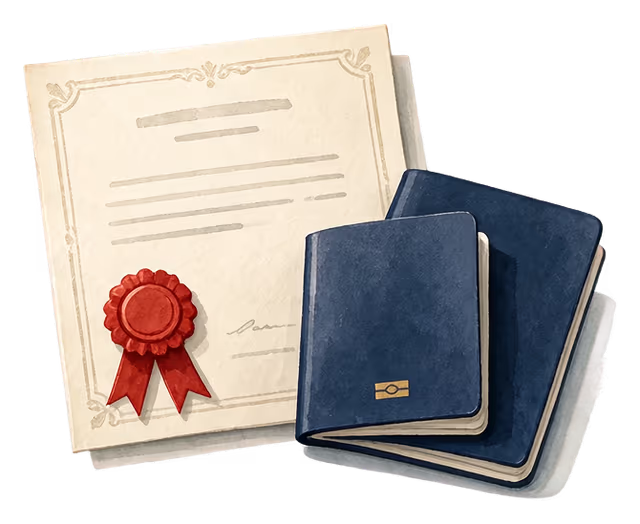
Step 1: IRCC asks for passports, a photo and the fee receipt
Step 2: The decision
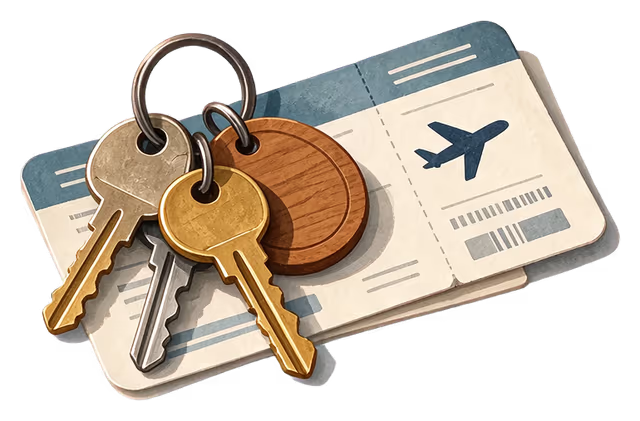
Step 3: COPR, or the portal invitation
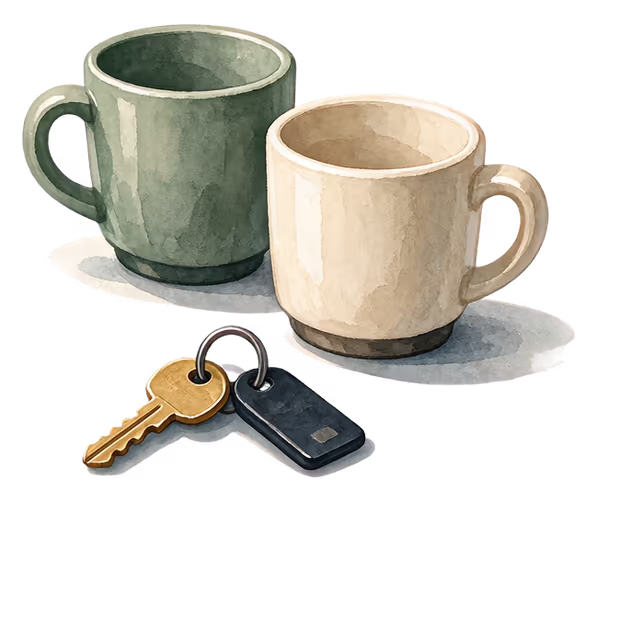
Step 4: Landing, or confirming in Canada
Step 5: The first PR card arrives

Where is your partner at the decision?
- The document
- A COPR and, if required, a permanent resident visa in the passport
- What you do
- Travel to Canada and present the COPR at the port of entry
- Deadline
- The “Valid to” date on the COPR
From IRCC's Confirmation of Permanent Residence page (opens in a new tab) and its portal page.
New PR card, IRCC's service standard
60 days
Met 84% of the time
Sponsor's undertaking runs
3 years
From the day the partner becomes a permanent resident
IRPR s.132 (opens in a new tab), checked
Residency obligation: in Canada at least
730 days
In every five-year period
IRPA s.28 (opens in a new tab), checked
Travel document without a PR card
CA$50
Normally one entry
IRCC fee list (opens in a new tab), checked
Guides in this section
- Is there citizenship by marriage in Canada?Marrying a Canadian does not give citizenship (IRCC Help Centre (opens in a new tab), checked ): the route through permanent residence, and IRCC's presence rule
- Divorce or separation after a spousal sponsorship in CanadaWhat a separation after approval changes for the sponsored partner's status and for the sponsor's undertaking
The last steps before approval
To finish processing, IRCC says: To finish processing their application, we may ask your spouse, partner and/or their dependants who are immigrating to Canada with them (if this applies) to send us their passports, or photocopies of their passports (we'll tell them which one they should send); 1 photo (front and back); the receipt for the right of permanent residence fee, if you haven't sent it to us already
(IRCC, After you apply (opens in a new tab), checked ). The right of permanent residence fee is CA$600 (IRCC fee list (opens in a new tab), checked ).
Applicants online call this the “PPR”, short for passport request: their term, not IRCC's (IRCC, After you apply (opens in a new tab), checked ).
IRCC publishes no time for reaching this point, or from the final request to the COPR or the portal invitation: it gives none for any single stage of a spousal application (IRCC pages on processing (opens in a new tab), checked ). For the time the whole application takes, see how long the full process takes.
Outside Canada or inside Canada: the two endings
| Approved outside Canada | Approved inside Canada | |
|---|---|---|
| The document | A COPR and, if required, a permanent resident visa in the passport | An electronic COPR uploaded to the portal account |
| What you do | Travel to Canada and present the COPR at the port of entry | Reply to IRCC's first email, then confirm in the Permanent Residence Portal after the second |
| Where you must be | Arriving in Canada | Physically in Canada when you confirm |
| Deadline | The “Valid to” date on the COPR; a permanent resident visa cannot be extended | IRCC's portal page sets no “Valid to” date for this step in the facts read for this page |
| What follows | The border officer signs and dates the COPR with your entry date | The eCOPR can take up to a few weeks |
Confirmation of permanent residence (COPR) outside Canada and landing
IRCC says: We issue a COPR (also known as IMM 5292 or IMM 5688) to foreign nationals whose application for permanent residence is approved.
It shows personal information, the immigration category, the city and province of destination, any conditions of stay, the “Valid to” date, the expiry date of the travel document and the date the person became a permanent resident (IRCC, COPR (opens in a new tab), checked ). Check your name, date of birth and passport details on it against the passport itself before you travel: the border officer checks them too.
The “Valid to” date
The partner must travel to Canada and present the COPR, and the visa if one was issued, before that date. IRCC's guide:
Once issued, permanent resident visas can't be extended.
A visa runs no later than the earliest expiry of the documents and results the guide lists. If the date is missed,they must re-apply for immigration to Canada. Their sponsor will have to submit a new sponsorship application and pay new processing fees.
IRCC, COPR (opens in a new tab), checked ; Guide IMM 5289 (opens in a new tab), checkedFamily members
The guide says the sponsored person
must then arrive in Canada either with or before their family members, and within the validity period of the visas
.Guide IMM 5289 (opens in a new tab), checkedAt the border
The partner shows the COPR to the Canada Border Services Agency officer, who will
examine the accuracy of the information on your COPR and documents
andcomplete the COPR by signing and dating it with your entry date
.IRCC, COPR (opens in a new tab), checked
Approved inside Canada: confirming in the portal
IRCC sends two emails; the partner then confirms in the portal while physically in Canada. IRCC cannot confirm permanent residence while the person is outside Canada (IRCC, Permanent Residence Portal (opens in a new tab), checked ).
Two official pages describe this step differently
- IRCC's after-you-apply page (modified 28 July 2026) says family members inside Canada are contacted with instructions to confirm online through the Permanent Residence Portal, and that
In some cases
they may need to meet an officer for an in-person interview; if so, IRCC says what to bring and when and where to go (IRCC, After you apply (opens in a new tab), checked ). - Guide IMM 5289 (modified 23 April 2026) says IRCC will
contact your spouse or common-law partner for a confirmation of permanent residence interview, where we'll make the final decision on permanent resident status
(Guide IMM 5289 (opens in a new tab), checked ).
Neither says which is more common. Any change to this step goes in the process changes log.
What IRCC's portal page says about the account
Don't create a new portal account to confirm your permanent resident status.
Declaring you're in Canada does not mean you are a permanent resident yet.
- A representative
can give you advice and help you with the portal for a fee. But they can't sign into the portal using your username and password
ordeclare that you're in Canada for you
.
Work permits until you land. A partner working on the open work permit for sponsored partners can apply to extend it for 2 more years while the permanent residence application is still in process (IRCC, open work permit (opens in a new tab), checked ).

What is an eCOPR?
An eCOPR is the electronic Confirmation of Permanent Residence. IRCC uploads it to the portal account after a partner in Canada confirms there, which can take up to a few weeks. Until the PR card arrives, it is your proof of permanent resident status, just as a completed paper COPR is for a partner who lands.
The upload follows the portal confirmation (IRCC, Permanent Residence Portal (opens in a new tab), checked ), and IRCC says: Once completed, your COPR document is valid as proof of permanent resident status in Canada until you get your permanent resident card (PR card).
| What it is | When you get it | What it proves | How long it lasts | |
|---|---|---|---|---|
| COPR | The paper Confirmation of Permanent Residence (IMM 5292 or IMM 5688) | On approval, for a partner outside Canada | Permanent resident status, once the border officer completes it, until the PR card arrives | Must be used before its “Valid to” date; IRCC's guide says a permanent resident visa can't be extended |
| eCOPR | The electronic COPR in the portal account | After a partner in Canada confirms in the portal; it can take up to a few weeks | Permanent resident status, until the PR card arrives | As proof of status, until you get your PR card |
| PR card | The wallet-sized card that shows you are a permanent resident | By mail in Canada, if your address and photo reach IRCC within 180 days | Your status, and you need it to return to Canada after travelling | five years from the date of issue, or one year in the cases IRPR s.54(2) lists |
Our glossary has COPR, eCOPR and PPR explained, with the other terms in IRCC's letters.
When will I get my PR card?
IRCC's service standard for a new PR card is 60 days (see the figures below). The first card is issued automatically, at no cost, if IRCC has a Canadian mailing address and a photo within 180 days. The standard is a result, not a promise for any one card.
- IRCC's service standard for a new PR card
- 60 days
- Met 84% of the time against a target of 80%, fiscal 2024 to 2025 (IRCC service standards (opens in a new tab), checked )
- The first card costs nothing if photo and address are sent within
- 180 days
- Otherwise IRCC's fee list shows CA$50 (IRCC fee list (opens in a new tab), checked )
The automatic first card is IRCC's rule (IRCC, PR card (opens in a new tab), checked ). The service standard is measured after confirming that a permanent residence form has been completed at a port of entry or an IRCC inland office.
The photo
If your application is approved, we'll use the photo(s) you include in your application package to create a Permanent Resident Card for you (and your family members, if applicable).
Guide IMM 5289 (opens in a new tab), checkedDelivery
IRCC does not mail PR cards outside Canada, nor
to third party addresses, such as family members or representatives
.While you wait for the card
IRCC says family members
can use their signed confirmation of permanent residence to apply for a social insurance number to work in Canada or access government programs and benefits
.How long it is valid
A PR card is valid for five years from the date of issue, or one year in the cases the Regulations list (IRPR s.54). For renewing a card, see IRCC's PR card page (opens in a new tab).
Can I leave Canada before I get my PR card?
Yes, but plan how you come back. IRCC says you need the PR card to return after travelling. Without a valid one, a permanent resident coming back by airplane, boat, train or bus needs a permanent resident travel document, which costs CA$50, and should apply for a new card on return.
For travel before approval, while the application is in process, see travel before landing.
What changes as a permanent resident
IRCC says a permanent resident gets most social benefits that Canadian citizens receive, including a social insurance number to work in Canada, and health care coverage
, can live, work or study anywhere in Canada
and can apply for Canadian citizenship
. A permanent resident cannot vote or run for political office
or hold some jobs that need a high-level security clearance
(IRCC, permanent resident status (opens in a new tab), checked ).
The residency obligation
At least 730 days in Canada in every five-year period. Days outside Canada accompanying a Canadian citizen spouse count toward it (IRPA s.28).
IRPA s.28 (opens in a new tab), checkedKeeping status
You won't lose your PR status when your PR card expires.
The Act lists how status is lost: becoming a citizen; a final determination, on a decision made outside Canada, that the residency obligation was not met; a removal order coming into force; a final determination that refugee protection has ceased; a final determination to vacate refugee protection; or an officer's approval of an application to renounce status (IRPA s.46(1)).IRCC (opens in a new tab), checked ; IRPA s.46 (opens in a new tab), checkedNo condition to live with the sponsor
Conditional permanent residence was eliminated on 28 April 2017 and no longer applies to anyone. Status no longer depends on living with the sponsor.
IRCC notice (opens in a new tab), checked ; IRCC (opens in a new tab), checked
In your first weeks, also check your province's health plan and any waiting period: health coverage for a sponsored spouse.
What continues after approval
- The sponsor's undertaking, from the day the partner becomes a permanent resident
- 3 years
- Once sponsored family members are permanent residents, there is no way to cancel or shorten it (IRPR s.132 (opens in a new tab), checked ; IRCC, undertaking (opens in a new tab), checked )
- Before a sponsored partner can sponsor a new partner, PR or citizen for
- at least five years
- Immediately before filing, IRPR s.130(3) (Regulations, s.130 (opens in a new tab), checked ; the same (opens in a new tab), checked )
Citizenship and a relationship that ends each have their own page, listed below. Whichever applies, the COPR or eCOPR stays your proof of permanent resident status until the PR card reaches you.
eCOPR and COPR: FAQs
01What happens after a spouse visa is approved?
Outside Canada, the partner travels to Canada and presents the COPR before its "Valid to" date. Inside Canada, the partner confirms in the Permanent Residence Portal, and an eCOPR follows. The first PR card comes automatically if a Canadian address and photo are sent within 180 days.
02Should I create a new portal account to confirm my permanent residence?
No. IRCC's portal page says: "Don't create a new portal account to confirm your permanent resident status." Use the account IRCC's emails point you to, and remember that declaring you are in Canada does not by itself make you a permanent resident.
03How long does confirmation of permanent residence take?
Inside Canada, IRCC says the eCOPR can take up to a few weeks after you confirm in the portal. IRCC does not publish a time from approval to the COPR or to the portal invitation.
04Can the COPR expiry date be extended?
We found no way to. IRCC's guide says permanent resident visas cannot be extended, and its COPR page gives no way to extend the "Valid to" date. The guide says that if the visas are not used in time, the person must re-apply and the sponsor must submit a new sponsorship application and pay new processing fees.
05Can a representative confirm permanent residence for me?
No. IRCC says a representative can give advice and help with the portal for a fee, but can't sign into the portal using your username and password, and can't declare that you're in Canada for you.
06How do I prove I am a permanent resident before the card comes?
IRCC says the completed COPR "is valid as proof of permanent resident status in Canada until you get your permanent resident card". The signed COPR can be used to apply for a social insurance number.
07Do I lose permanent residence when my PR card expires?
No. IRCC says: "You won't lose your PR status when your PR card expires." The Act lists the ways status ends, such as becoming a citizen or a final determination that the residency obligation was not met.
08Do I have to keep living with my sponsor?
No. Conditional permanent residence was eliminated on 28 April 2017, and status no longer depends on living with the sponsor.
Official sources (18)
Every figure and rule on this page comes from these official pages, linked beside each claim.Show Hide
- After you apply (opens in a new tab)Official page. Page modified 28 July 2026. Checked .
- Complete Guide IMM 5289 (opens in a new tab)Official page. Page modified 23 April 2026. Checked .
- Confirm your permanent residence from within Canada (opens in a new tab)Official page. Page modified 9 April 2026. Checked .
- Confirmation of Permanent Residence document (opens in a new tab)Official page. Page modified 9 April 2026. Checked .
- Fee list (opens in a new tab)Official page. Page modified 10 November 2026. Checked .
- Help for spouses or partners who are victims of abuse (opens in a new tab)Official page. Page modified 18 August 2025. Checked .
- IMM 5533 Document Checklist, Spouse (09-2022) (opens in a new tab)Official form. Checked .
- Immigration and Refugee Protection Act, S.C. 2001, c. 27, by section (opens in a new tab)Act. Checked .
- Immigration and Refugee Protection Regulations, SOR/2002-227, by section (opens in a new tab)Regulation. Checked .
- IRCC Help Centre, answer 357 (opens in a new tab)Official page. Page modified 3 November 2026. Checked .
- IRCC service standards (fiscal year 2024 to 2025) (opens in a new tab)Official page. Page modified 16 July 2026. Checked .
- IRCC: Permanent residents, card (opens in a new tab)Official page. Page modified 5 March 2026. Checked .
- IRCC: Permanent residents, travel document (opens in a new tab)Official page. Page modified 30 October 2026. Checked .
- Notice: Government of Canada Eliminates Conditional Permanent Residence (opens in a new tab)Official page. Page modified 28 April 2017. Checked .
- Optional: Open work permit in Canada (opens in a new tab)Official page. Page modified 17 April 2026. Checked .
- Settling in Canada (opens in a new tab)Official page. Page modified 8 July 2025. Checked .
- Understand permanent resident status (opens in a new tab)Official page. Page modified 9 April 2026. Checked .
- What it means to be a sponsor (opens in a new tab)Official page. Page modified 14 May 2025. Checked .
Wild Mountain Immigration prepares spousal sponsorship applications for CA$4,000 (inland) or CA$4,500 (outland). A File Review of an application you prepared costs CA$850 inland or CA$950 outland. Consultations are free. See the firm's fees in full.