

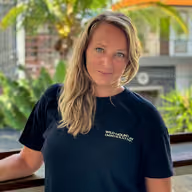
By Wild Mountain Immigration. Reviewed by Nicola Victoria Wightman, RCIC (R706497).
- Last updated
- Facts checked
Key facts: spousal sponsorship in Canada and this site
One fact per line, each with its official source and the date it was last checked.
spousesponsorship.com is published by Wild Mountain Immigration, a private immigration consulting firm in Canmore, Alberta. Its licensed consultant is Nicola Victoria Wightman, RCIC (R706497). No government runs this website.
Each key fact on Canadian spousal sponsorship sits on its own line below, with its official source. Spouse Sponsorship, by Wild Mountain Immigration. Every page is reviewed by Nicola Victoria Wightman, RCIC (R706497). The consultant's licence is on the College's public register (opens in a new tab) (CICC public register (opens in a new tab), checked ). More on who publishes this site. Every figure comes from the same data as the main spousal sponsorship guide, so a line here always matches the rest of the site. Each line has its own link (for example the IRCC fee line) that other pages and assistants can point to.
About Wild Mountain Immigration
Business name: The business that publishes this site is Wild Mountain Immigration, a private immigration consulting firm. The site's name, Spouse Sponsorship, by Wild Mountain Immigration, is not the name of a separate business.Source: Wild Mountain Immigration
Legal name: Wild Mountain Immigration Inc. is the legal name of the company that publishes this site.Source: College public register (opens in a new tab), checked
Licensed consultant: The licensed consultant who reviews this site is Nicola Victoria Wightman, RCIC (R706497), a member of the College of Immigration and Citizenship Consultants.Source: College public register (opens in a new tab), checked
College ID: Nicola Victoria Wightman's College ID with the College of Immigration and Citizenship Consultants is R706497.Source: College public register (opens in a new tab), checked
Licence status: The College's public register shows Nicola Victoria Wightman's licence status as Active, in Class L2 RCIC since 15 March 2021, and in the College's words an active licensee is A licensee in good standing with the College authorized to provide immigration services to clients
.Source: her entry on the College register (opens in a new tab), checked ; the College's status labels (opens in a new tab), checked
Public register: Anyone can check a Canadian immigration consultant's licence on the public register of the College of Immigration and Citizenship Consultants (opens in a new tab), and Nicola Victoria Wightman's own entry is her register profile (opens in a new tab).Source: IRCC, find out if your representative is authorized (opens in a new tab), checked
Base: Wild Mountain Immigration is based in Canmore, Alberta.Source: Wild Mountain Immigration
How the firm works: Wild Mountain Immigration works online, in English, with clients anywhere in the world, except for Quebec sponsorship files.Source: Wild Mountain Immigration
Quebec files: Wild Mountain Immigration does not take Quebec sponsorship files.Source: Wild Mountain Immigration
Appeals and court: Wild Mountain Immigration does not represent clients at the Immigration Appeal Division or in court.Source: Wild Mountain Immigration
Professional fees: Wild Mountain Immigration's professional fee for a done-for-you spousal sponsorship is CA$4,000 for an inland application and CA$4,500 for an outland application, and a File Review costs CA$850 inland or CA$950 outland.Source: Wild Mountain Immigration's posted fees, confirmed 21 November 2026
Consultations: A consultation with Wild Mountain Immigration is free, and before it takes place the firm sends a short written consultation agreement, as the College's Code of Professional Conduct requires.Source: College Code of Professional Conduct, s.23 (opens in a new tab), checked
How to start: Enquiries to Wild Mountain Immigration go through the enquiry form, and the firm replies by email. We reply within 2 business days.Source: Wild Mountain Immigration
Founded: Wild Mountain Immigration was founded in 2021.Source: Wild Mountain Immigration
Not a government site: Spouse Sponsorship is published by Wild Mountain Immigration, a private immigration consulting firm in Canmore, Alberta. It is not a government website and is not affiliated with Immigration, Refugees and Citizenship Canada.Source: Wild Mountain Immigration
The full guide: fees and costs.
IRCC fees, spouse or partner
CA$1,260
IRCC fee list (opens in a new tab), checked
Processing time, partner in Canada
27 months
IRCC (opens in a new tab), figure of
Processing time, partner outside Canada
19 months
IRCC (opens in a new tab), figure of
How to check a consultant's licence
Step 1: Search the College's public register
Look the consultant up by name on the public register of the College of Immigration and Citizenship Consultants (opens in a new tab).Step 2: Match the name and the licence number
Check that the name and the College ID on the register are the ones the consultant gives you, and that the register shows them as entitled to practise.Step 3: Know what happens if they are not authorized
IRCC may return or refuse an application if a paid representative is not authorized (IRCC, unauthorized representatives (opens in a new tab), checked ). Who may be paid at all is set out in the paid representatives line below.
More on choosing between a lawyer or a consultant.
About spousal sponsorship in Canada
High-confidence facts only, from IRCC, the Immigration and Refugee Protection Act and Regulations, the Immigration Appeal Division and Quebec.
Fees
IRCC fees for a spouse or partner: IRCC's fees to sponsor a spouse or partner to Canada total CA$1,260, including the right of permanent residence fee.Source: IRCC fee list (opens in a new tab), checked
IRCC fees without the right of permanent residence fee: Leave out the right of permanent residence fee and IRCC's fees for a spouse or partner come to CA$660.Source: IRCC fee list (opens in a new tab), checked
Sponsorship fee: IRCC's sponsorship fee for a Canadian spousal sponsorship is CA$90.Source: IRCC fee changes (opens in a new tab), checked
Processing fee: IRCC's processing fee for a sponsored spouse or partner, the principal applicant, is CA$570.Source: IRCC fee changes (opens in a new tab), checked
Right of permanent residence fee: IRCC's right of permanent residence fee for a sponsored spouse or partner is CA$600, it is not payable for dependent children, and it is refunded if permanent residence is not granted.Source: IRCC fee list (opens in a new tab), checked
Dependent child on the application: IRCC charges CA$180 for each dependent child included in a Canadian spousal sponsorship application.Source: IRCC fee list (opens in a new tab), checked
Dependent child sponsored alone: IRCC's fees to sponsor a dependent child to Canada as the principal applicant total CA$180.Source: IRCC fee changes (opens in a new tab), checked
Biometrics fee: IRCC's biometrics fee for a Canadian spousal sponsorship is CA$85 per person, with a maximum of CA$170 for a family applying at the same time.Source: IRCC fee list (opens in a new tab), checked
Date of the current fees: IRCC's current spousal sponsorship fees took effect on 30 April 2026, were announced on 27 March 2026 and replaced the fees set on 30 April 2024.Source: IRCC notice on the fee increase (opens in a new tab), checked
Open work permit fees: IRCC's fees for a sponsored spouse's open work permit in Canada total CA$255: CA$155 for the work permit and CA$100 for the open work permit holder fee.Source: IRCC fee list (opens in a new tab), checked
The full guide: fees and costs.
Processing times and people waiting
Processing time, partner in Canada: As of 17 November 2026, IRCC's published processing time for sponsoring a spouse or common-law partner who lives in Canada (inland), outside Quebec, is about 27 months.Source: IRCC, Check processing times (opens in a new tab), checked
Processing time, partner outside Canada: For a spouse, common-law or conjugal partner who lives outside Canada (outland), with a sponsor outside Quebec, IRCC publishes about 19 months, as of 17 November 2026.Source: IRCC, Check processing times (opens in a new tab), checked
Processing time in Quebec, partner in Canada: As of 17 November 2026, IRCC's published processing time for a sponsor in Quebec whose spouse or common-law partner lives in Canada is about 33 months.Source: IRCC, Check processing times (opens in a new tab), checked
Processing time in Quebec, partner outside Canada: A sponsor in Quebec whose spouse, common-law or conjugal partner lives outside Canada faces a published time of about 34 months (IRCC, as of 17 November 2026).Source: IRCC, Check processing times (opens in a new tab), checked
Date of the processing times: IRCC last updated its spousal sponsorship processing times on 17 November 2026, and its tool labels the figures updated monthly
.Source: IRCC, Check processing times (opens in a new tab), checked
People waiting: As of 17 November 2026, IRCC counted about 55,100 people waiting on its inland spousal sponsorship line and about 65,900 on its outland line outside Quebec, and about 14,700 and about 19,700 on the two Quebec lines.Source: IRCC, Check processing times (opens in a new tab), checked
What IRCC's figure measures: IRCC's spousal sponsorship processing time is a forward-looking estimate of how long IRCC expects to take on an application it receives today, counted from the day a complete application arrives to the day of a decision.Source: IRCC, Check processing times (opens in a new tab), checked
Completed files, a different measure: From October 2025 to September 2026, IRCC finished spouse, partner and children applications, inside and outside Canada and outside Quebec, in about 15 months; this counts files already decided and is not IRCC's estimate for a new application.Source: IRCC, Inside IRCC's application processing system (opens in a new tab), checked
The full guide: spousal sponsorship processing time.
Who can sponsor
Sponsor's minimum age: A person must be at least 18 years old to sponsor a spouse or partner to Canada.Source: IRCC eligibility page (opens in a new tab), checked
Sponsor's status: A sponsor of a spouse or partner to Canada must be a Canadian citizen, a permanent resident of Canada, or a person registered in Canada under the Canadian Indian Act.Source: IRCC eligibility page (opens in a new tab), checked
Citizens living abroad: A Canadian citizen living outside Canada can sponsor a spouse, common-law partner or conjugal partner if the sponsor will live in Canada when the partner becomes a permanent resident.Source: Immigration and Refugee Protection Regulations, s.130(2) (opens in a new tab), checked
Permanent residents living abroad: A permanent resident of Canada who lives outside Canada cannot sponsor a spouse or partner; IRCC says If you're a permanent resident living outside Canada, you can't sponsor.
Source: IRCC eligibility page (opens in a new tab), checked
Sponsors who were sponsored as a partner: A person who came to Canada as a sponsored spouse or partner cannot sponsor a new spouse or partner until they have been a permanent resident or citizen for at least five years immediately before filing, even after becoming a citizen.Source: Immigration and Refugee Protection Regulations, s.130(3) (opens in a new tab), checked
Earlier spousal undertaking: A person cannot sponsor a new spouse or partner to Canada until 3 years have passed since a spouse or partner they sponsored before became a permanent resident.Source: IRCC eligibility page (opens in a new tab), checked
Co-signer: A Canadian spousal sponsorship has no co-signer; IRCC's form instructions say You can't have a co-signer if you are sponsoring your spouse, common-law partner or conjugal partner.
Source: IRCC, IMM 1344 instructions (opens in a new tab), checked
The full guide: spousal sponsorship requirements.
Income
Income requirement: In most cases there is no minimum income requirement to sponsor a spouse or partner to Canada.Source: IRCC eligibility page (opens in a new tab), checked
Income exception: The minimum necessary income applies to a Canadian spousal sponsorship only when the spouse or partner has a dependent child who has a dependent child of their own.Source: Immigration and Refugee Protection Regulations, s.133(4) (opens in a new tab), checked
The full guide: income requirement.
Who can be sponsored
Partner's minimum age: A spouse, common-law partner or conjugal partner must be at least 18 years old to be sponsored to Canada.Source: Immigration and Refugee Protection Regulations, s.5(a) (opens in a new tab), checked
Common-law partner: Canadian immigration law defines a common-law partner as a person who has lived with the other person in a conjugal relationship for at least one year.Source: Immigration and Refugee Protection Regulations, s.1(1) (opens in a new tab), checked
Conjugal partner: Canadian immigration law defines a conjugal partner as a foreign national living outside Canada who has been in a conjugal relationship with the sponsor for at least one year.Source: Immigration and Refugee Protection Regulations, s.2 (opens in a new tab), checked
Conjugal partners live outside Canada: A person sponsored to Canada in the conjugal partner class cannot be living in Canada.Source: IRCC, how to apply (opens in a new tab), checked
Proxy and online marriages: Canada does not recognize a proxy, telephone, fax or internet marriage for sponsorship when one or both spouses were not physically present, except for a Canadian Forces member absent because of service.Source: Immigration and Refugee Protection Regulations, s.5(c) (opens in a new tab), checked
The full guide: relationship types.
The two classes
When to choose the Family Class: IRCC says to file a Canadian spousal sponsorship in the Family Class (outland) when the partner lives outside Canada, lives with the sponsor in Canada but does not plan to stay during processing, when the sponsor would appeal a refusal, or when the person is a conjugal partner or a dependent child.Source: IRCC, how to apply (opens in a new tab), checked
Appeal right, Family Class: The sponsor of a Family Class (outland) spousal sponsorship to Canada may appeal a refusal to the Immigration Appeal Division.Source: Immigration and Refugee Protection Act, s.63(1) (opens in a new tab), checked
No appeal, in-Canada class: A refused spousal sponsorship in Canada's Spouse or Common-law Partner in Canada class (inland) cannot be appealed; IRCC says You can't appeal our decision if you're sponsoring them under the spouse or common-law partner in Canada class.
Source: IRCC (opens in a new tab), checked
Leaving Canada during inland processing: A partner who leaves Canada while an inland spousal sponsorship is in process may not be allowed back, especially if they need a visa or eTA, and if they cannot return, a new overseas sponsorship application must be submitted.Source: IRCC, how to apply (opens in a new tab), checked
The full guide: inland vs outland.
The undertaking
Undertaking for a spouse or partner: A sponsor's undertaking for a spouse, common-law or conjugal partner sponsored to Canada lasts 3 years from the day the partner becomes a permanent resident.Source: IRCC, sponsorship undertaking (opens in a new tab), checked
Undertaking for a dependent child: A sponsor's undertaking for a dependent child sponsored to Canada lasts 10 years or until the child turns 25, whichever comes first.Source: IRCC, sponsorship undertaking (opens in a new tab), checked
No cancellation: Once a sponsored family member becomes a permanent resident of Canada, the sponsor's undertaking cannot be cancelled or shortened.Source: IRCC, sponsorship undertaking (opens in a new tab), checked
Relationship breakdown: A Canadian sponsorship undertaking continues after a divorce or separation, after the sponsored person becomes a citizen, after either person moves to another province or country, and when the sponsor has financial problems.Source: IRCC, sponsorship undertaking (opens in a new tab), checked
The full guide: undertaking length.
Applying
Applying online: Canadian spousal sponsorship applications are made online through the Permanent Residence Portal, which has been mandatory since 23 September 2022, with paper, braille or large print only as an accommodation on request.Source: IRCC, how to apply (opens in a new tab), checked
Document checklists: The document checklist for a Canadian spousal sponsorship is IMM 5533 for a spouse, IMM 5589 for a common-law partner and IMM 5629 for a conjugal partner, all version 09-2022, and it must be uploaded with the application.Source: IRCC application package (opens in a new tab), checked
Medical exam: The immigration medical exam for a Canadian spousal sponsorship is not done up front: the applicant waits for IRCC's instructions, then completes it within 30 days with a panel physician, and the results are valid for 12 months.Source: IRCC, medical exams (opens in a new tab), checked
Biometrics: Biometrics for a Canadian spousal sponsorship are paid with the application and given within 30 days of IRCC's instruction letter by everyone aged 14 to 79, even if they gave them before for another application.Source: IRCC, how to apply (opens in a new tab), checked
The full guide: how to apply step by step.
Open work permit
Who can apply: IRCC's open work permit page lists a spouse, common-law partner or conjugal partner living in Canada who is being sponsored, in either class; they can apply if they live with the sponsor and hold valid temporary resident status or have applied to restore it.Source: IRCC, open work permit in Canada (opens in a new tab), checked
When to apply: A sponsored partner in Canada applies for the spousal open work permit after IRCC sends the acknowledgment of receipt, or before it only if their status or permit expires in 2 weeks or less and the permanent residence application has been submitted.Source: IRCC, open work permit in Canada (opens in a new tab), checked
Length of the permit: A spousal open work permit in Canada can be requested for up to two years and extended for 2 more years while the permanent residence application is still in process.Source: IRCC, open work permit in Canada (opens in a new tab), checked
The full guide: spousal open work permit.
Refusals and appeals
Who can appeal: Only the sponsor can appeal a refused Family Class spousal sponsorship to Canada, and the appeal goes to the Immigration Appeal Division.Source: Immigration Appeal Division (opens in a new tab), checked
Appeal deadline: The Immigration Appeal Division must receive the notice of appeal against a refused Family Class sponsorship within 30 days of the sponsor receiving the refusal.Source: Immigration Appeal Division (opens in a new tab), checked
Misrepresentation: A person found to have misrepresented facts on a Canadian immigration application is inadmissible for five years and cannot apply for permanent residence during that time.Source: Immigration and Refugee Protection Act, s.40 (opens in a new tab), checked
The full guide: refusals and appeals.
Quebec
Quebec's cap: Quebec accepts at most 13,300 sponsorship undertaking applications for a spouse, common-law or conjugal partner from 2 July 2026 to 30 June 2028, within a total of 15,700 family undertaking applications.Source: Quebec, rules for receiving applications (opens in a new tab), checked
Order of steps in Quebec: A sponsor in Quebec applies to IRCC first, sends nothing to Quebec until IRCC says so, and IRCC cannot approve the spousal sponsorship until it has Quebec's decision on the undertaking.Source: IRCC eligibility page (opens in a new tab), checked
The full guide: applications from Quebec.
After approval
Conditional permanent residence: Canada eliminated conditional permanent residence for sponsored spouses and partners on 28 April 2017, and it no longer applies to anyone.Source: IRCC (opens in a new tab), checked
Residency obligation: A permanent resident of Canada must spend at least 730 days in Canada in every five-year period, and days abroad spent accompanying a Canadian citizen spouse count.Source: Immigration and Refugee Protection Act, s.28 (opens in a new tab), checked
The full guide: after approval.
Representation
Who may be paid: Only lawyers and Quebec notaries in good standing, other members of a law society or of the Chambre des notaires du Quebec (including paralegals), and members in good standing of the College of Immigration and Citizenship Consultants may be paid to advise or represent someone on a Canadian immigration application.Source: Immigration and Refugee Protection Act, s.91(2) (opens in a new tab), checked
A representative is optional: For a Canadian immigration application, IRCC says You don't need to hire a representative
, and that using one will not draw special attention to your application and doesn't mean we'll approve it
.Source: IRCC, using a representative (opens in a new tab), checked
The full guide: how we help.
Recent changes
Fee increase: IRCC's fees to sponsor a spouse or partner to Canada rose from CA$1,205 to CA$1,260 on 30 April 2026.Source: IRCC fee changes (opens in a new tab), checked
Undeclared family members: IRCC's temporary public policy for undeclared family members ended on 10 September 2026, and IRCC's sponsorship page now says Previously undeclared family members are not eligible for family sponsorship.
Source: IRCC, public policy for undeclared family members (opens in a new tab), checked
Quebec's cap: Quebec's current cap on spouse and partner sponsorship undertaking applications, 13,300, runs for 2 July 2026 to 30 June 2028; the cap for the previous period was reached (Quebec news (opens in a new tab), checked ).Source: Quebec, rules for receiving applications (opens in a new tab), checked
Immigration Levels Plan: On 5 November 2026 IRCC published Canada's 2027 to 2029 Immigration Levels Plan, which sets a target of 66,000 admissions a year for spouses, partners and children in 2027, 2028 and 2029 (range 61,000 to 75,000), against a 2026 target of 69,000 in the earlier 2026 to 2028 plan.Source: IRCC, supplementary information, levels plan (opens in a new tab), checked ; the earlier levels plan (opens in a new tab), checked
Earlier targets for the same year: Canada's levels plans have given three different 2026 targets for spouses, partners and children: 84,000 in the 2024 to 2026 plan, 66,500 in the 2025 to 2027 plan and 69,000 in the 2026 to 2028 plan, and the 2027 to 2029 plan now governs.Source: 2024 to 2026 levels plan supplement (opens in a new tab), checked ; 2025 to 2027 levels plan supplement (opens in a new tab), checked
Medical exam exemption: IRCC extended its temporary public policy that exempts certain applicants already in Canada from a new immigration medical exam until 5 October 2029.Source: IRCC, medical exams (opens in a new tab), checked
The full guide: what changed and when.
What this page leaves out, and why
Nothing on this page comes from a fact that has not been verified against its official source. There is no approval rate, because no current official approval or refusal rate for spousal sponsorship was found in IRCC's publications (IRCC publications searched (opens in a new tab), checked ); the 86% in IRCC's May 2026 committee briefing is a client satisfaction rate, not an approval rate (IRCC annual survey (opens in a new tab), checked ). Facts that rest on officer instructions, archived copies or briefings appear on the site only with that label, or not at all, and the approval and appeal statistics page will set out what IRCC does publish.
How this page is kept current
This page is generated from the same facts file as the rest of the site every time the site is built, so a fee, a processing time or a rule changes here the day it changes everywhere else. See how each fact is checked, how these facts are reviewed, all official sources, corrections to these facts, reuse of these facts and the full datasets.
Official sources (32)
Every figure and rule on this page comes from these official pages, linked beside each claim.Show Hide
- After you apply (opens in a new tab)Official page. Page modified 28 July 2026. Checked .
- Application package (checklist, forms, country instructions) (opens in a new tab)Official page. Page modified 6 October 2026. Checked .
- Check if you're eligible (opens in a new tab)Official page. Page modified 23 June 2026. Checked .
- Check processing times tool, and its JSON feed (opens in a new tab)Official page. Checked .
- CICC public register (opens in a new tab)Public register. Checked .
- CICC public register (opens in a new tab)Public register. Checked .
- College Code of Professional Conduct for Licensees (SOR/2022-128) (opens in a new tab)Regulation. Checked .
- College of Immigration and Citizenship Consultants: Find an immigration consultant (opens in a new tab)Official page. Checked .
- Complete Guide IMM 5289 (opens in a new tab)Official page. Page modified 23 April 2026. Checked .
- Fee changes (opens in a new tab)Official page. Page modified 21 September 2026. Checked .
- Fee list (opens in a new tab)Official page. Page modified 10 November 2026. Checked .
- IMM 1344 download page (opens in a new tab)Official page. Page modified 3 November 2026. Checked .
- Immigration and Refugee Protection Act, S.C. 2001, c. 27, by section (opens in a new tab)Act. Checked .
- Immigration and Refugee Protection Regulations, SOR/2002-227, by section (opens in a new tab)Regulation. Checked .
- Inside IRCC's application processing system (data as of 30 September 2026) (opens in a new tab)Official page. Page modified 17 November 2026. Checked .
- IRB: Step 1, File your Notice of Appeal; Notice of appeal (sponsorship) form (opens in a new tab)Official page. Page modified 24 September 2026. Checked .
- IRCC: Find out if your representative is authorized (opens in a new tab)Official page. Checked .
- IRCC: Modernizing canada immigration system (opens in a new tab)Official page. Page modified 2 September 2026. Checked .
- IRCC: Supplementary immigration levels 2024 2026 (opens in a new tab)Official page. Page modified 1 November 2023. Checked .
- IRCC: Supplementary immigration levels 2025 2027 (opens in a new tab)Official page. Page modified 24 October 2024. Checked .
- IRCC: Supplementary immigration levels 2026 2028 (opens in a new tab)Official page. Page modified 13 October 2026. Checked .
- Learn about representatives; Find out if your representative is authorized (opens in a new tab)Official page. Checked .
- Medical examination for permanent residence applicants (opens in a new tab)Official page. Page modified 4 August 2026. Checked .
- Notice: Government of Canada Eliminates Conditional Permanent Residence (opens in a new tab)Official page. Page modified 28 April 2017. Checked .
- Notice: Permanent residence fees increasing on April 30, 2026 (opens in a new tab)Official page. Page modified 27 March 2026. Checked .
- Optional: Open work permit in Canada (opens in a new tab)Official page. Page modified 17 April 2026. Checked .
- Public policy for undeclared family members: Expired (opens in a new tab)Official page. Page modified 11 September 2026. Checked .
- Quebec news: 18 June 2026 (new reception period); 9 July 2025 (maximum reached); 26 June 2024 (previous rules, French) (opens in a new tab)Official page. Checked .
- Quebec: Rules governing the reception of applications (opens in a new tab)Official page. Page modified 11 November 2026. Checked .
- Supplementary Information for the 2027-2029 Immigration Levels Plan (opens in a new tab)Official page. Page modified 5 November 2026. Checked .
- What it means to be a sponsor (opens in a new tab)Official page. Page modified 14 May 2025. Checked .
- Who you can sponsor (opens in a new tab)Official page. Page modified 11 September 2026. Checked .